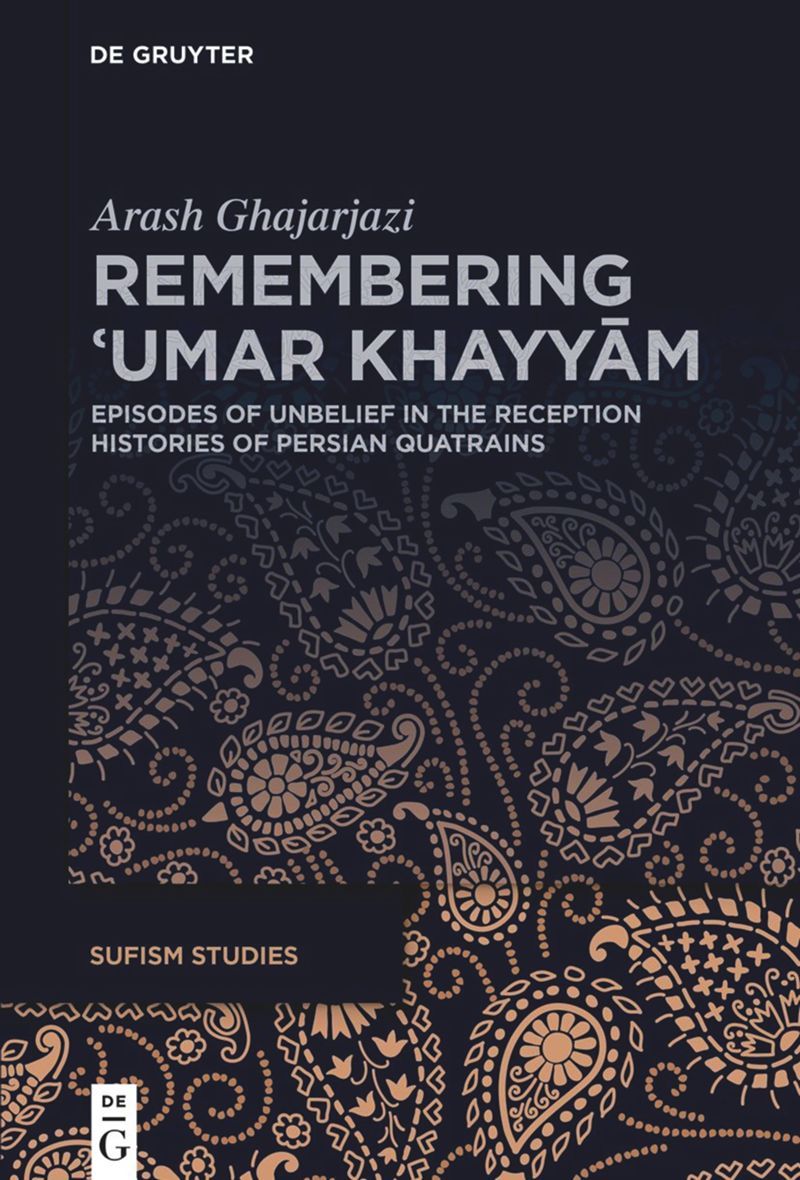
Remembering ‘Umar Khayyám. Episodes of Unbelief in the Reception Histories of Persian Quatrains. Arash Ghajarjazi. Berlin, De Gruyter, 2025. 340 p., 18 illus. ISBN: 9783111617077. (Sufism studies; 3)
This book explores the Persian sage ʿUmar Khayyām and the globally renowned quatrains (rubāʿiyyāt) attributed to him from a new angle. These quatrains have unleashed responses from Sufis and Islamic theologians, fostering secular thought in the Persianate world. From the early 12th century to the present, ʿUmar Khayyām’s persona has been a source of inspiration for various literate communities. This monograph addresses an undesirable gap in Khayyām scholarship by re-examining the reception of his quatrains within a changing collective memory. It investigates a wide range of texts and objects, including Sufi texts, chronicles, mystical poetry anthologies, memorial monuments, Victorian illustrations, and modern periodicals. The focus is on how the remembrance of Khayyām has contributed to the formation of a secular intellectual tradition in modern Iran. The book argues for a re-conceptualisation of Khayyām as a nexus of Sufi literature, memory, and secularity. Additionally, it critically examines traditional scholarship on Khayyām’s biography and the debates regarding the authenticity of his quatrains. This work aims to connect scholars of Sufism Studies, memory studies, and Persian and Islamic Studies.